Tips
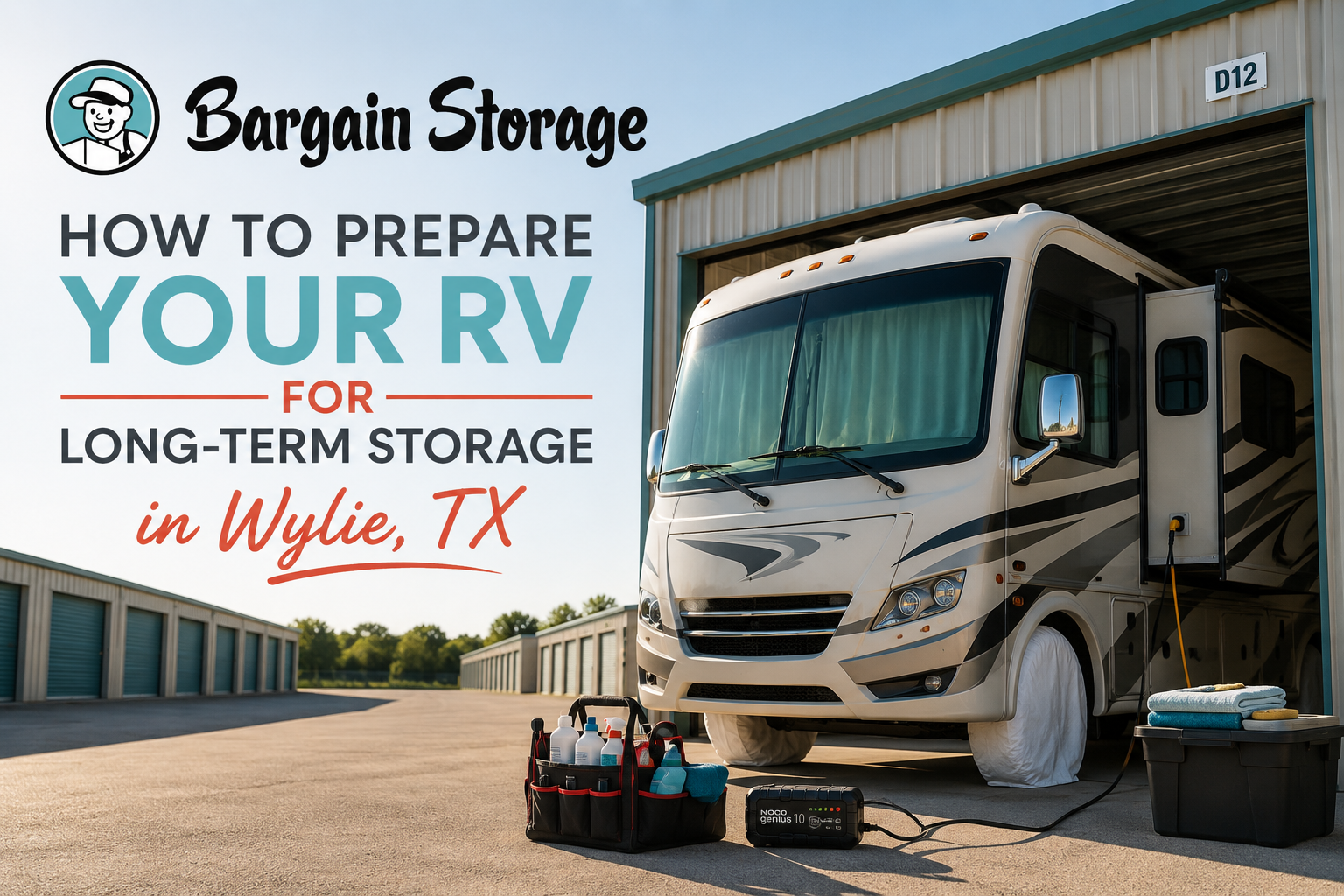
An RV opens up a summer's worth of vacation possibilities, but for months at a time in the fall and winter, it just sits. How you prepare it before it goes into storage decides whether it starts right up in the spring or turns into a weekend of repairs. Texas doesn't get the hard freezes that force a lot of RV owners farther north into a full winterization, but months of North Texas heat, sun, and the occasional cold snap can do plenty of damage on their own.
Here's how to get your rig ready to store, and where to park it in Wylie once it's ready.
Clean It Out and Control Moisture Inside
Clean the inside and outside before the RV goes into storage, not after. Wipe down counters and cabinets, wipe up any spills, and pull out damp towels, blankets, and linens. Loose fabrics that will sit for months are worth vacuum-sealing so they don't pick up moisture or a musty smell. Set a couple of moisture-absorbing tubs or packets, like DampRid, inside the rig itself, with a few more in closets, cabinets, and under the sink. If any moisture does creep in while it's closed up for months, they'll pull it out before it turns into mold or mildew.
Pull anything perishable out of the fridge and pantry, and run the fridge for a day or two beforehand so it's fully defrosted and dry. Check under couch cushions and inside any built-in furniture for crumbs and food, and wash any fabric with food or drink stains before it sits for months. Leftover food is exactly what draws mice and roaches into a parked RV over a Texas summer, and both are far easier to keep out than to get out.
Flush and treat the black and gray tanks so nothing is sitting and souring for months. A full wash of the exterior, top to bottom, keeps tree sap, bird droppings, road grime, and salt from etching into the paint ...
Richard Gastmeier
August 25th, 2026